
Cybersecurity refers to practices, processes, and tools used to protect systems, networks, and data from cyber threats. With the increasing reliance on technology, protecting digital assets has become essential. Cybersecurity covers personal, organizational, and governmental levels, focusing on maintaining confidentiality, integrity, and availability of information.
Understanding cybersecurity practices is important for preventing unauthorized access, data breaches, and online attacks. Organizations, individuals, and governments use cybersecurity measures to secure sensitive information, maintain system operations, and prevent financial and reputational losses.
Common Types of Cyber Threats
Cyber threats come in various forms. Knowing them helps in preparing effective defense measures.
Malware: Software designed to harm devices or steal data, including viruses, worms, and trojans.
Phishing: Fraudulent attempts to obtain sensitive information through emails or fake websites.
Ransomware: Malware that encrypts files and demands payment for recovery.
Denial of Service (DoS): Attacks that overload systems, making them unavailable.
Man-in-the-Middle (MitM): Interception of communication to steal or modify data.
SQL Injection: Exploiting vulnerabilities in web applications to access databases.
Zero-Day Exploits: Attacks that target previously unknown software vulnerabilities.
Understanding threats allows individuals and organizations to implement proper protection measures.
Core Principles of Cybersecurity
Cybersecurity relies on several principles to maintain secure systems:
Confidentiality: Protecting information from unauthorized access.
Integrity: Ensuring data is accurate and not altered without permission.
Availability: Making systems and data accessible when needed.
Authentication: Verifying the identity of users and systems.
Non-repudiation: Ensuring actions cannot be denied by those performing them.
These principles guide the design and implementation of cybersecurity practices.
Cybersecurity Practices for Individuals
Individuals can adopt several practices to protect personal information:
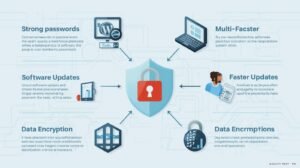
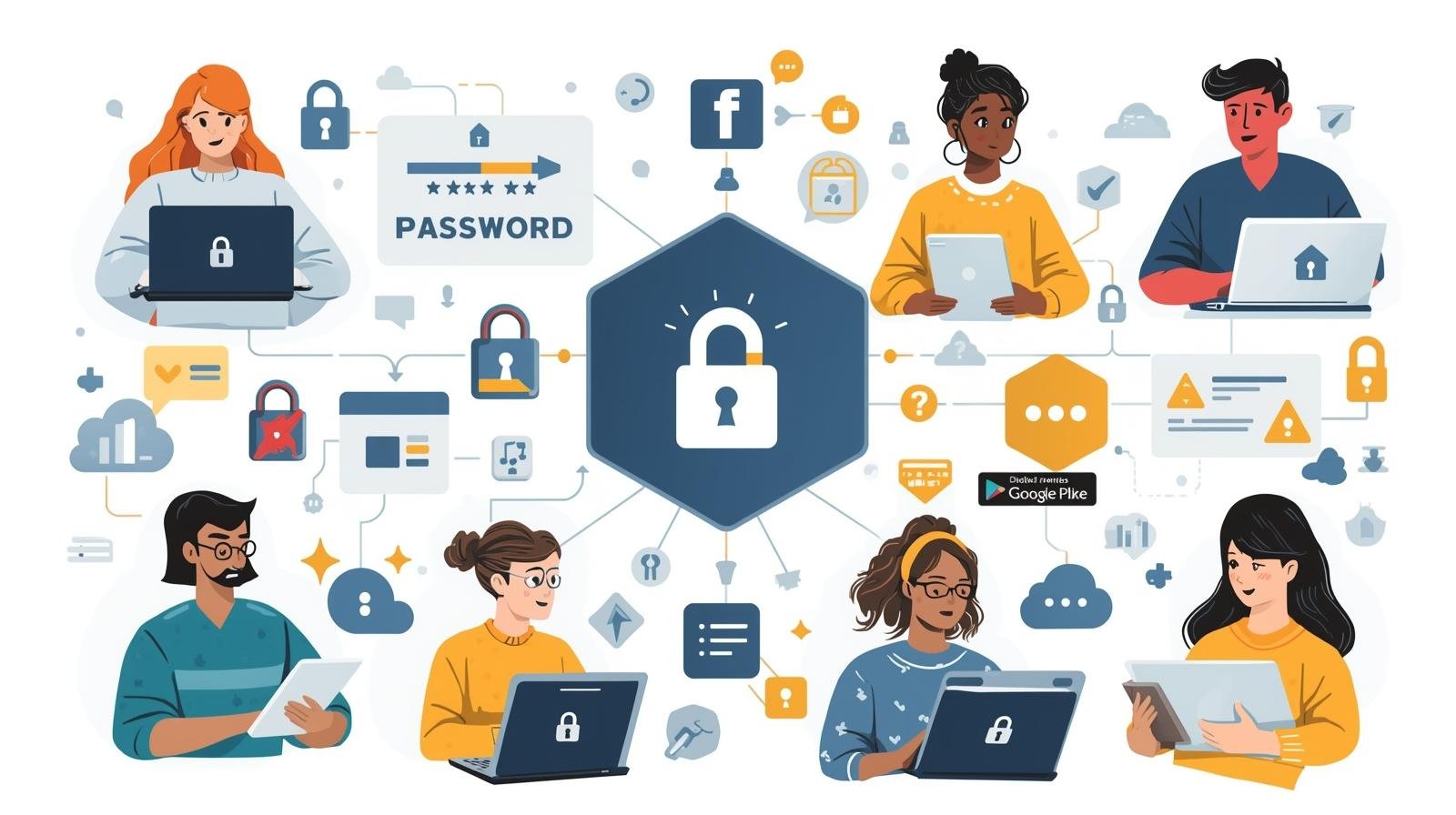
Use strong passwords and update them regularly.
Enable multi-factor authentication (MFA) on accounts.
Keep software, operating systems, and applications updated.
Avoid clicking suspicious links or downloading unknown files.
Use antivirus and anti-malware software.
Regularly back up important files.
Secure Wi-Fi networks with strong passwords.
These practices reduce the risk of identity theft, fraud, and data loss.
Cybersecurity Practices for Organizations
Organizations need structured cybersecurity policies and procedures:
Network Security: Protect internal networks using firewalls, intrusion detection systems, and segmentation.
Endpoint Security: Ensure devices connected to the network follow security standards.
Access Control: Limit user access based on roles and responsibilities.
Data Encryption: Encrypt sensitive data during storage and transmission.
Regular Audits: Conduct audits and vulnerability assessments to identify risks.
Employee Training: Educate staff on cybersecurity awareness and procedures.
Incident Response Plan: Develop a plan to respond to breaches or attacks.
These measures maintain organizational security, compliance, and operational continuity.
Cybersecurity Tools and Technologies
Several tools support cybersecurity practices:
Firewalls: Block unauthorized access to networks.
Antivirus Software: Detect and remove malware.
Encryption Tools: Secure data for storage and transmission.
Intrusion Detection Systems (IDS): Monitor networks for suspicious activity.
Security Information and Event Management (SIEM): Analyze security events and alerts.
Virtual Private Networks (VPNs): Secure connections over public networks.
Patch Management Tools: Ensure timely software updates and vulnerability fixes.
Choosing the right combination of tools depends on the system environment, risk level, and organizational needs.
Cloud Security Practices
With cloud adoption, securing cloud infrastructure has become critical:
Configure access controls and permissions carefully.
Encrypt data in transit and at rest.
Monitor cloud activity for unauthorized access.
Use multi-factor authentication for cloud accounts.
Regularly review and update security configurations.
Cloud security ensures sensitive information and applications remain protected in shared environments.
Mobile Device Security
Mobile devices require specific cybersecurity practices:
Install updates and patches promptly.
Use device encryption and lock screens.
Avoid installing applications from unverified sources.
Use mobile security apps for threat detection.
Back up mobile data regularly.
Mobile security protects personal and organizational information on smartphones and tablets.
Cybersecurity for Remote Work
Remote work introduces new security challenges:
Use secure VPN connections to access company networks.
Avoid public Wi-Fi networks for sensitive operations.
Apply endpoint security on home devices.
Implement strong authentication for remote access.
Educate employees on phishing and social engineering risks.
Secure remote work practices maintain organizational security while supporting flexible work arrangements.
Cybersecurity Incident Response
Preparedness reduces the impact of security incidents:
Detection: Monitor systems to identify attacks quickly.
Containment: Isolate affected systems to prevent spread.
Eradication: Remove malicious code and close vulnerabilities.
Recovery: Restore systems and data to normal operations.
Post-Incident Review: Analyze the incident to improve future security measures.
A structured response ensures minimal downtime and data loss during attacks.
Regulatory Compliance and Cybersecurity
Organizations must comply with regulations to protect data:
GDPR: Protects personal data in the European Union.
HIPAA: Secures health information in the United States.
PCI DSS: Secures payment card information globally.
ISO 27001: Provides international standards for information security management.
Compliance ensures legal adherence and builds trust with customers and partners.
Emerging Trends in Cybersecurity
The cybersecurity landscape evolves with technology:
Artificial Intelligence: Used for threat detection and automated responses.
Zero Trust Architecture: Assumes no trust for internal or external networks and verifies every access request.
IoT Security: Secures connected devices in homes, industries, and infrastructure.
Cloud Security Enhancements: Advanced encryption and monitoring for cloud environments.
Cybersecurity Awareness: Increasing focus on human factors to reduce risk.
Staying updated on trends helps in proactive security planning.